AI Prompting Framework
At Prudential, I created an AI prompting framework to help designers use AI more intentionally across research, synthesis, ideation, documentation, and stakeholder communication.


Context
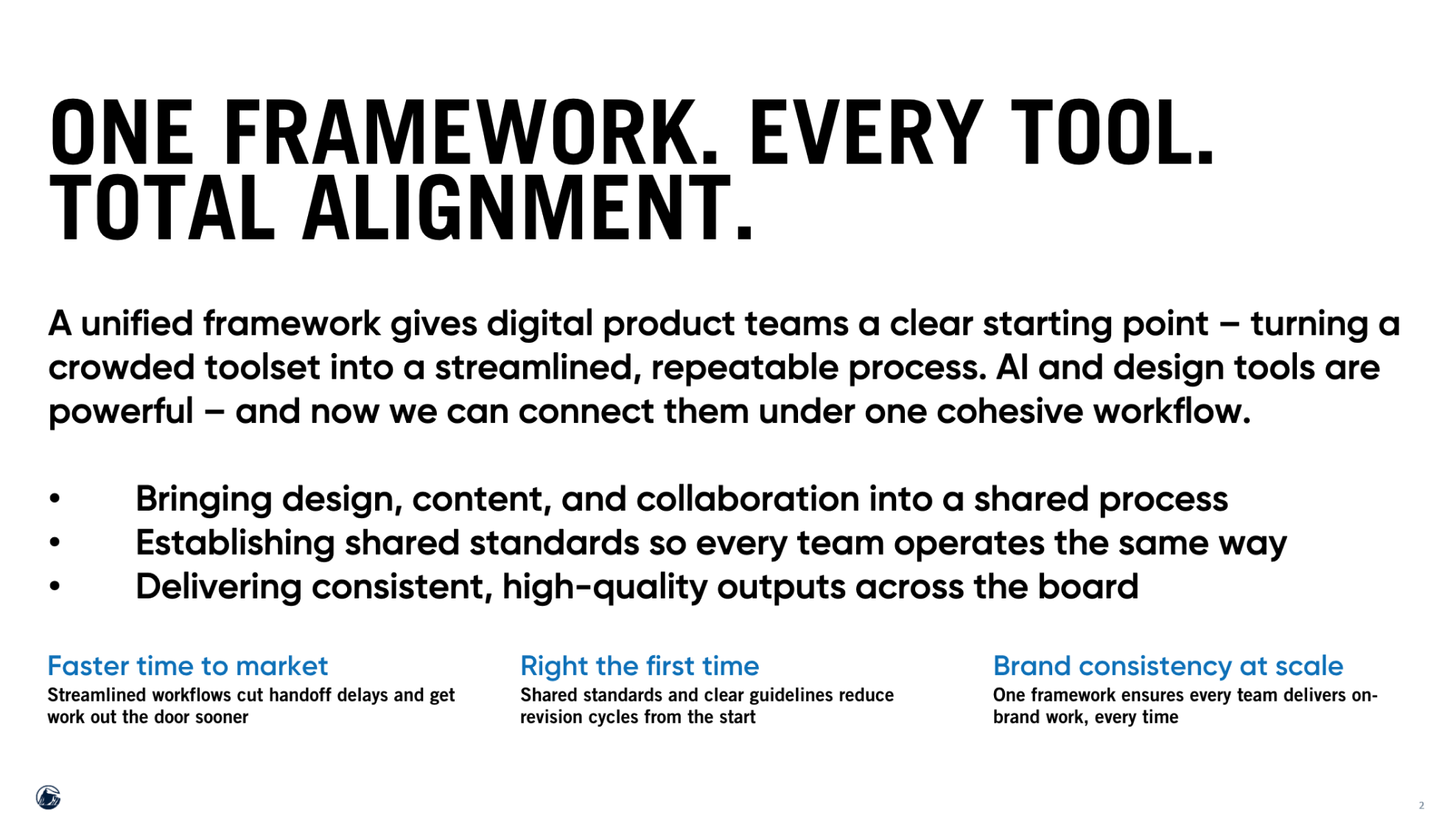
While working at Prudential, I created an AI prompting framework to help designers move from experimental, one-off AI usage to a more intentional, repeatable, and governed way of working. The design organization was beginning to adopt AI quickly, but designers were still asking practical questions like, "Which tool should I use?" and "How do I know if this output is usable?" Without a shared framework, AI usage risked becoming inconsistent across research, synthesis, documentation, ideation, and stakeholder communication.
The goal of the framework was not simply to help designers write better prompts. It was to create a shared operating model for how AI could support UX work while still keeping human judgment, design ethics, and business context at the center of the process.
Challenge
Before the framework, AI use was more exploratory and tool-driven. Designers could try different platforms, but there was no consistent way to decide when AI was appropriate, how to structure the request, or how to evaluate the output.
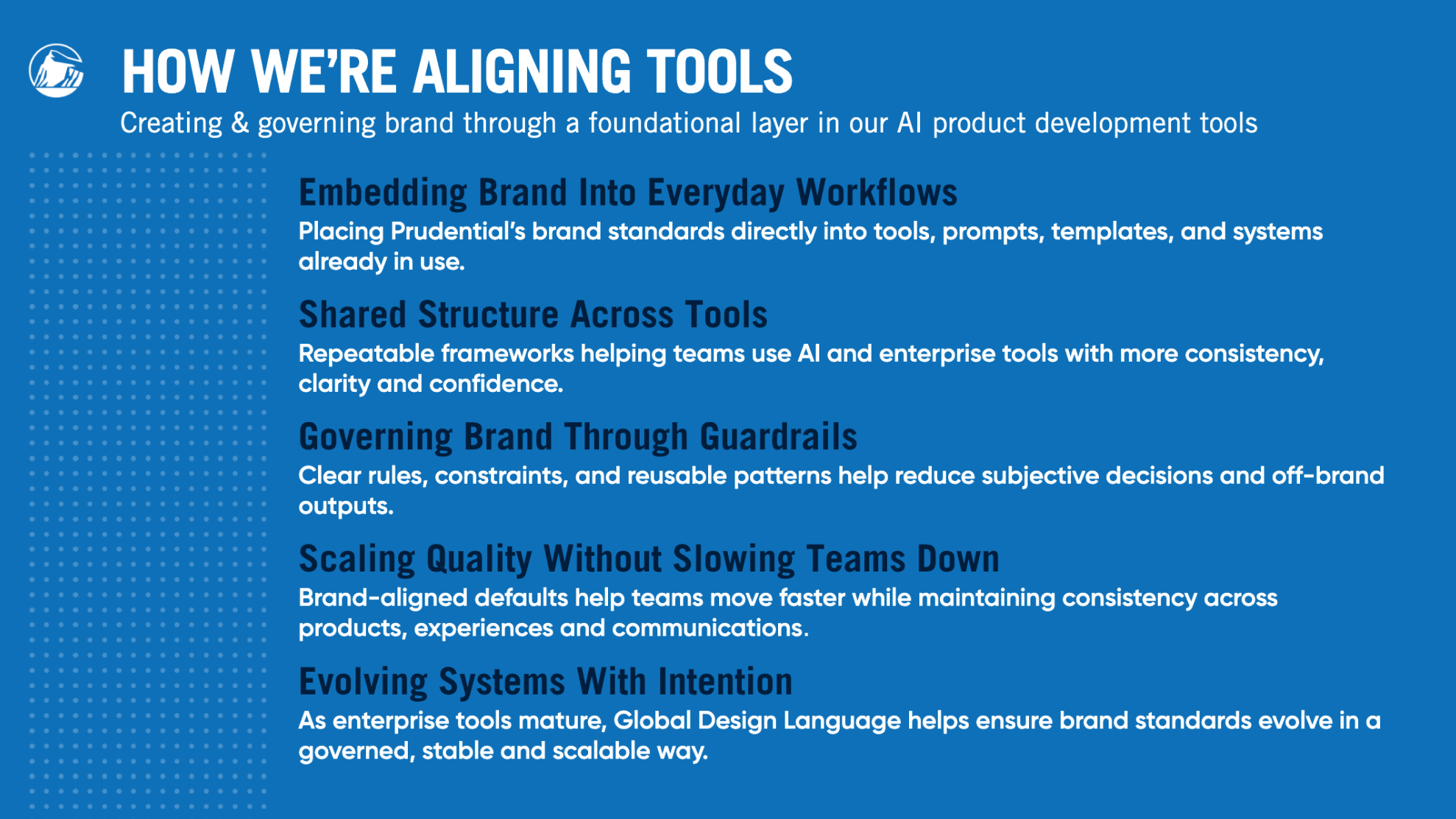
Without structure, adoption risked being inconsistent and trust in AI-generated outputs risked eroding before it had a chance to take hold. The framework needed to reposition AI as a DesignOps capability, not just a productivity shortcut. It needed to create shared language, repeatable workflows, and clearer guardrails for when AI could support the work versus where human design judgment was required.
This was especially important in an enterprise environment, where designers needed to balance speed with consistency, risk, stakeholder trust, and quality of decision-making.
Approach
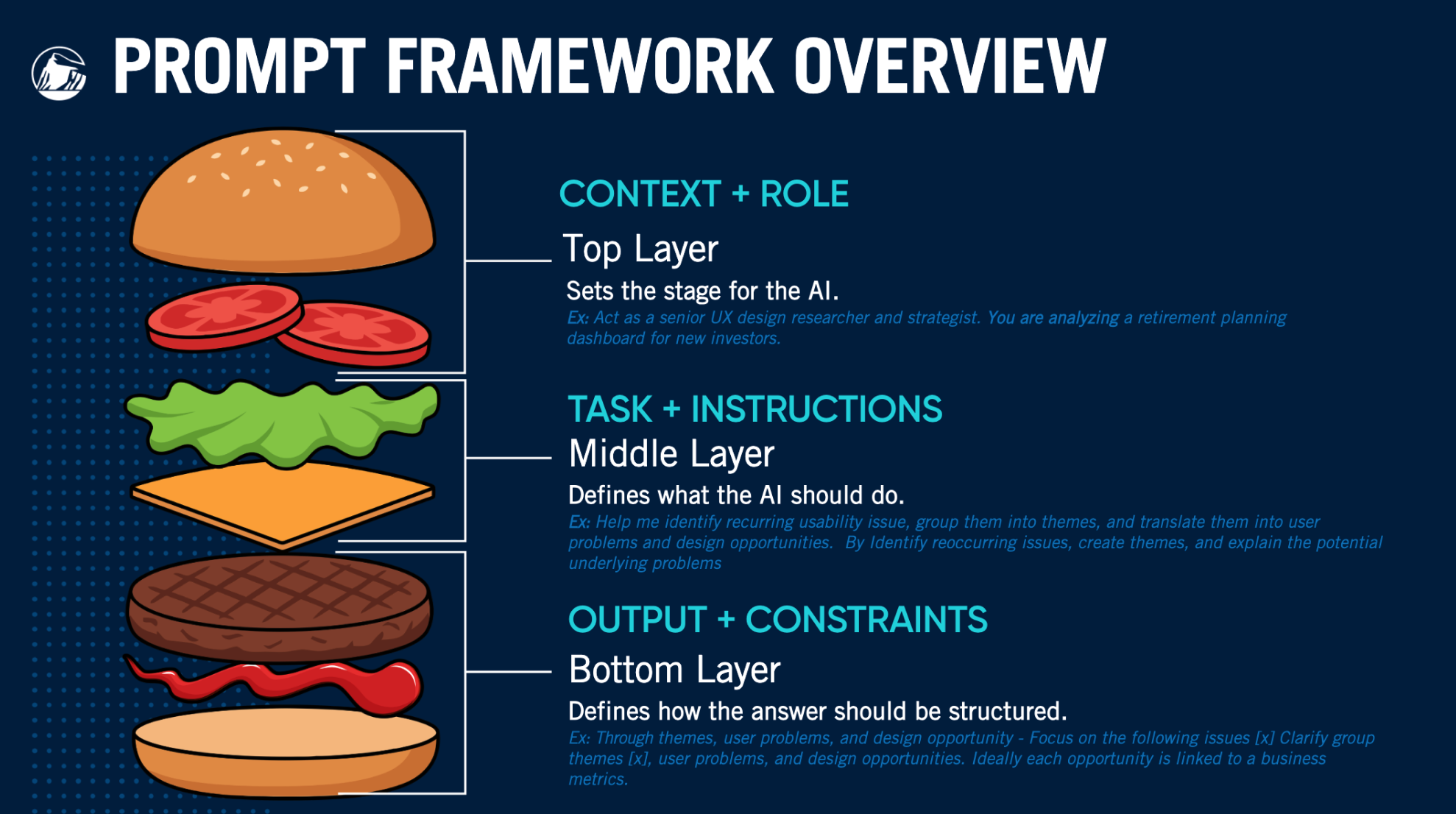
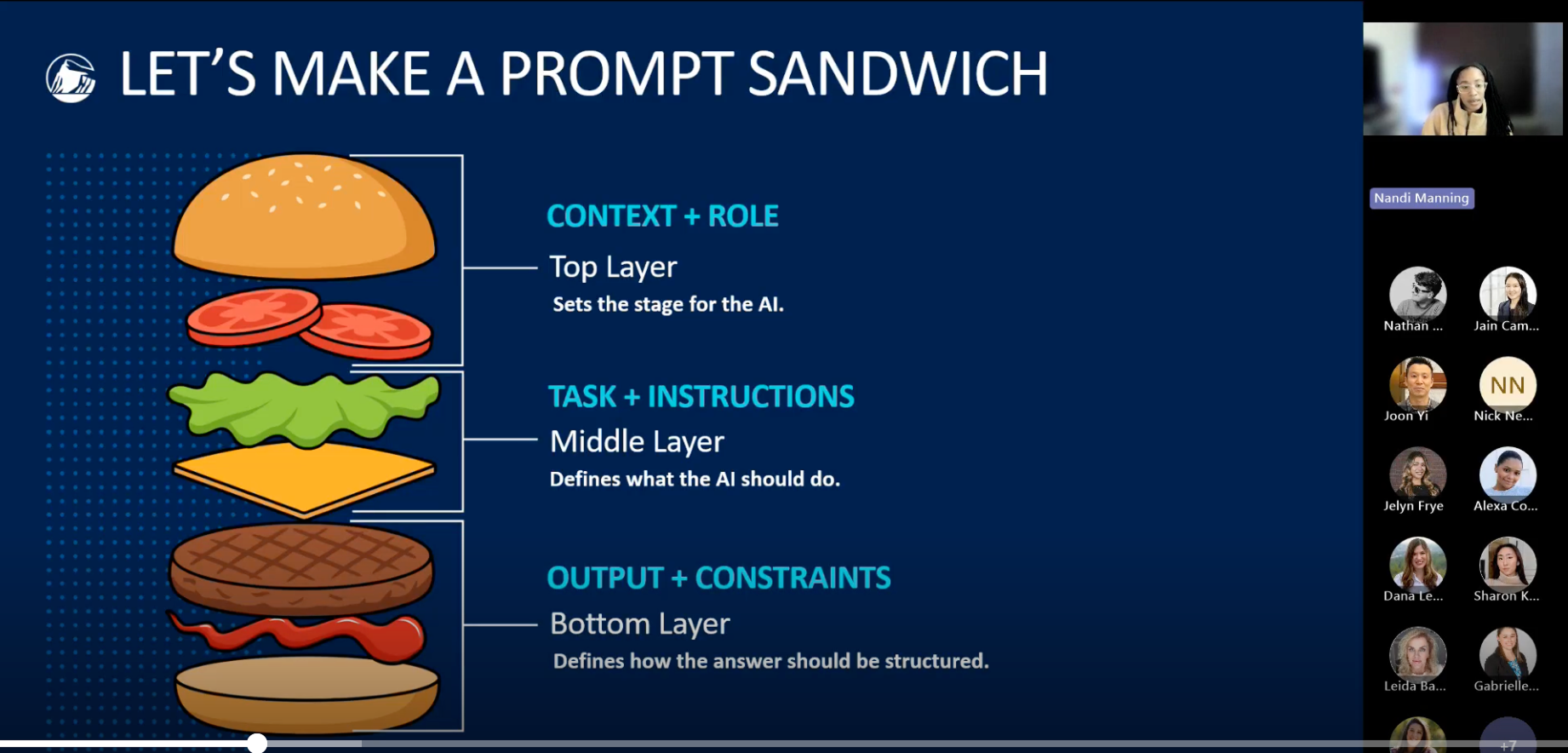
The framework gave designers a structured way to define the inputs and expectations behind an AI-assisted task before asking a tool to generate output. It standardized how designers framed context, goal, constraints, audience, output format, evaluation criteria, and human-review checkpoints. In other words, it helped designers shift from asking AI a vague question to giving it a clear design brief.
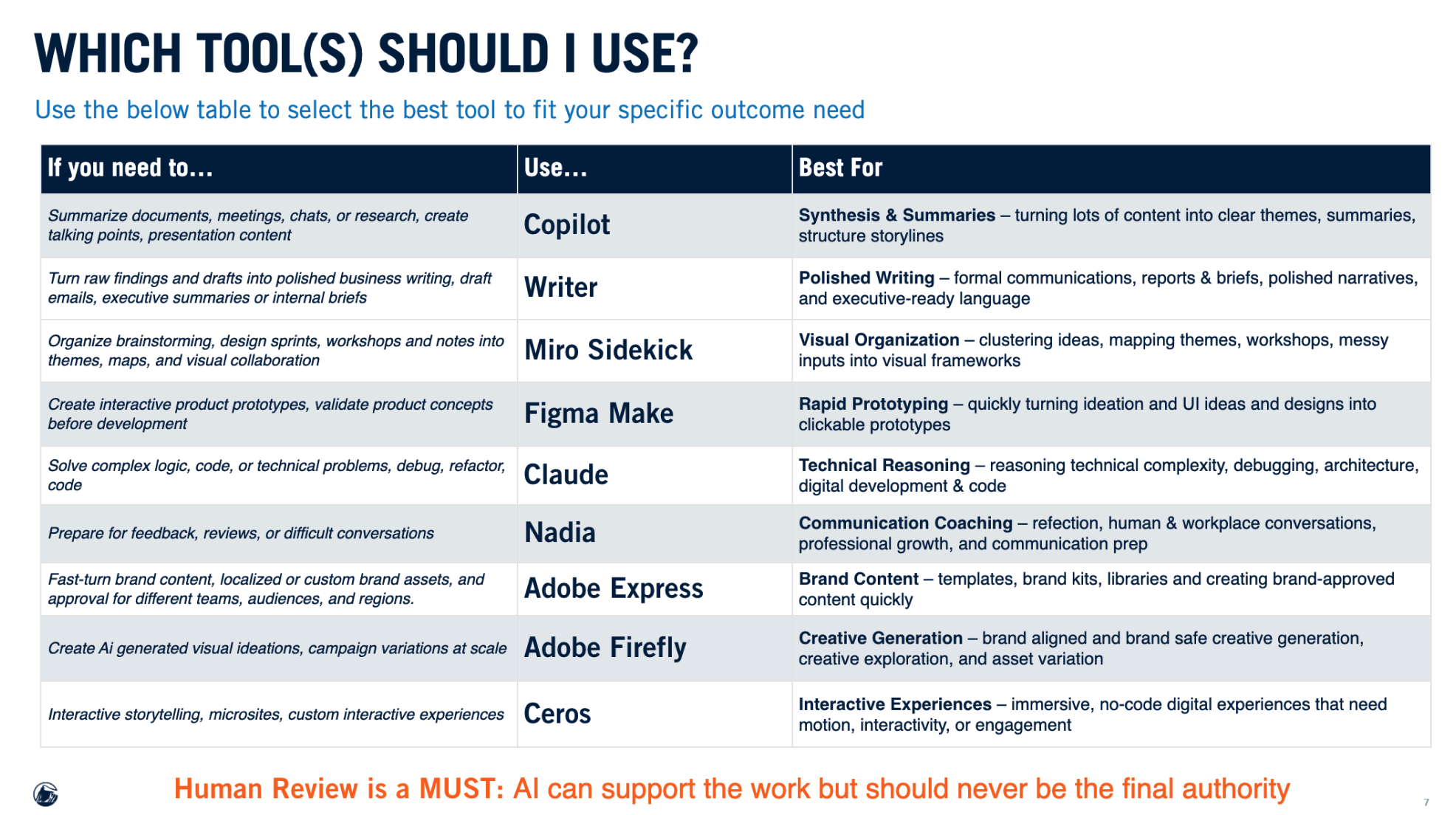
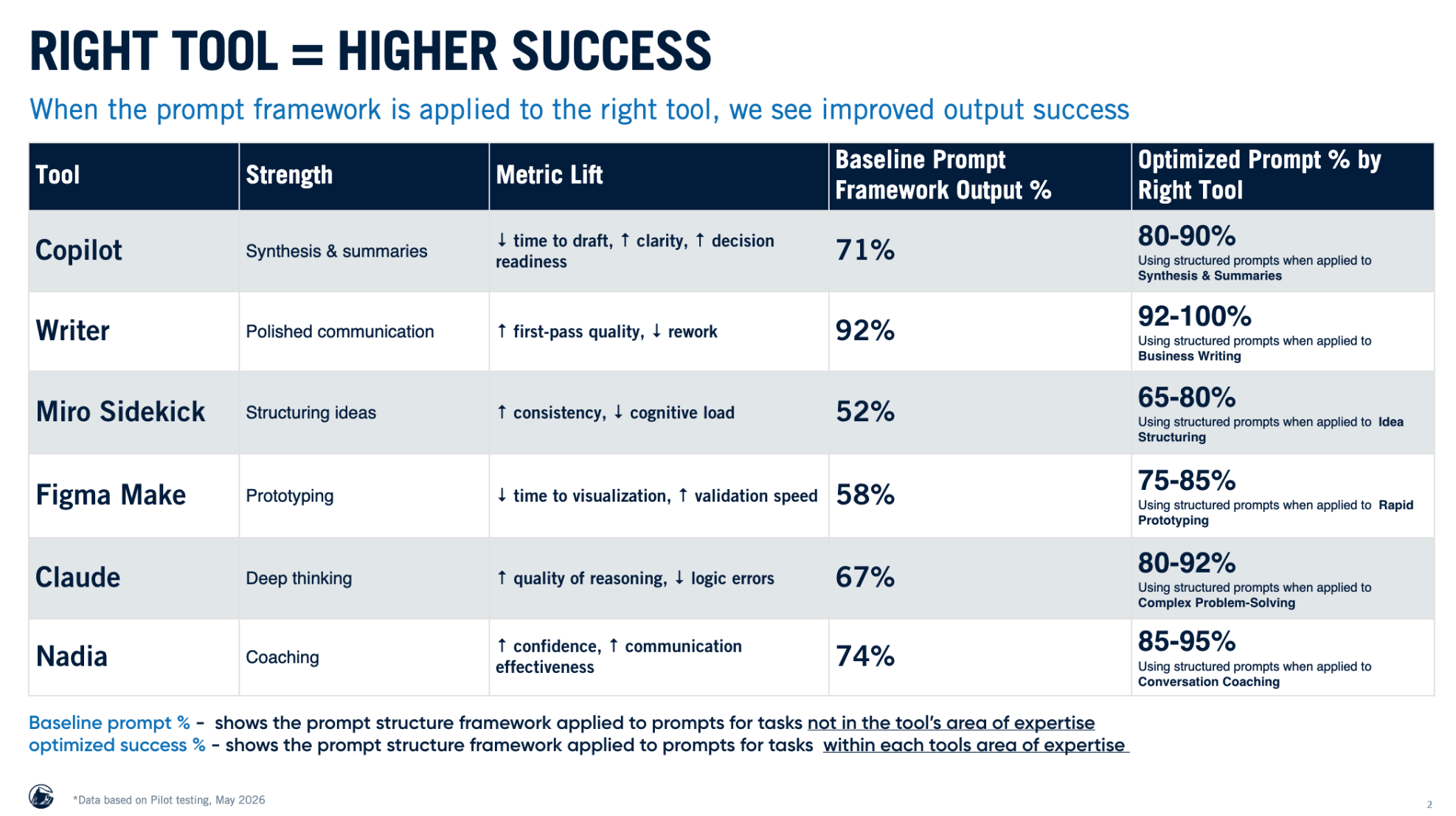
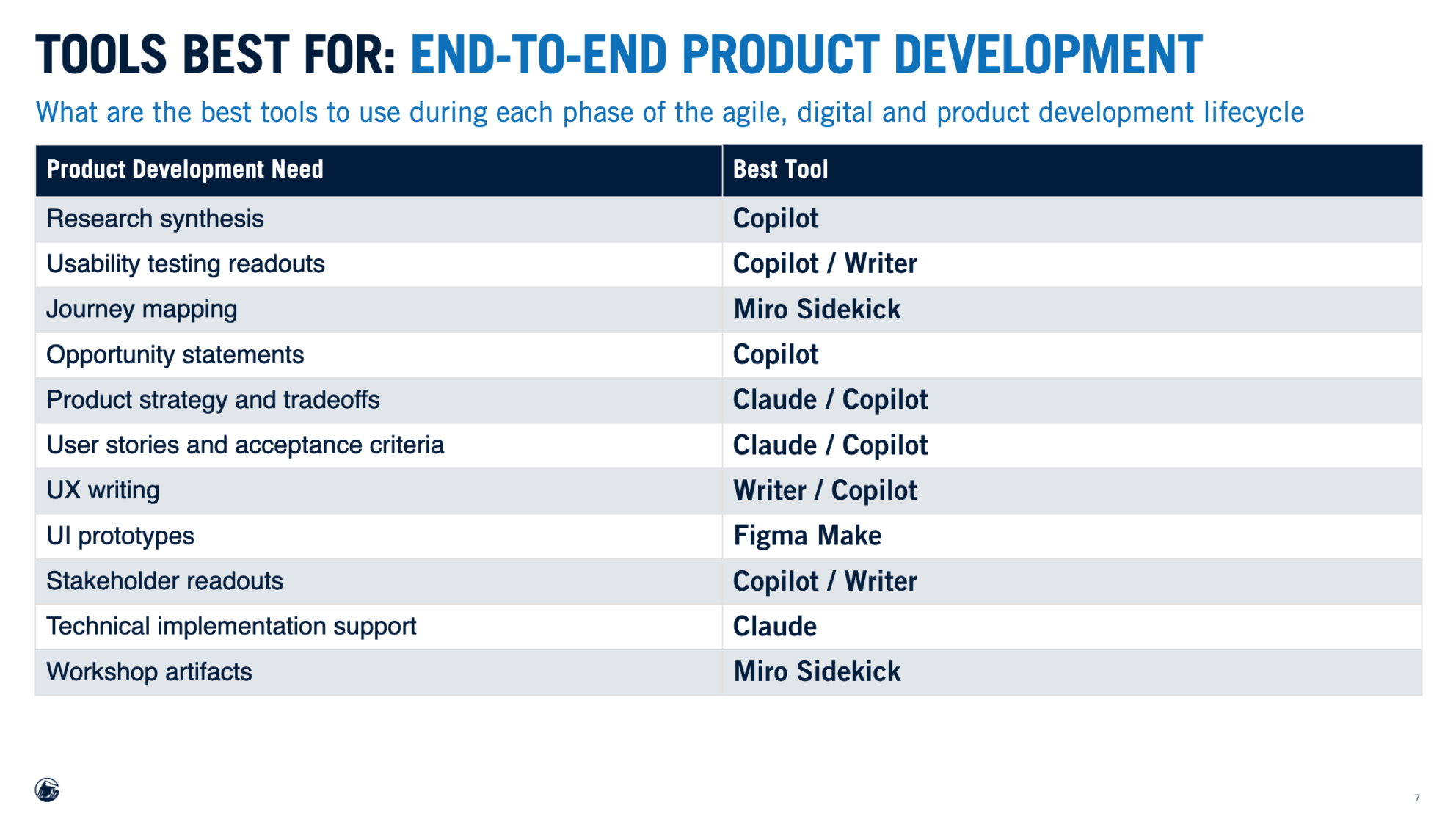
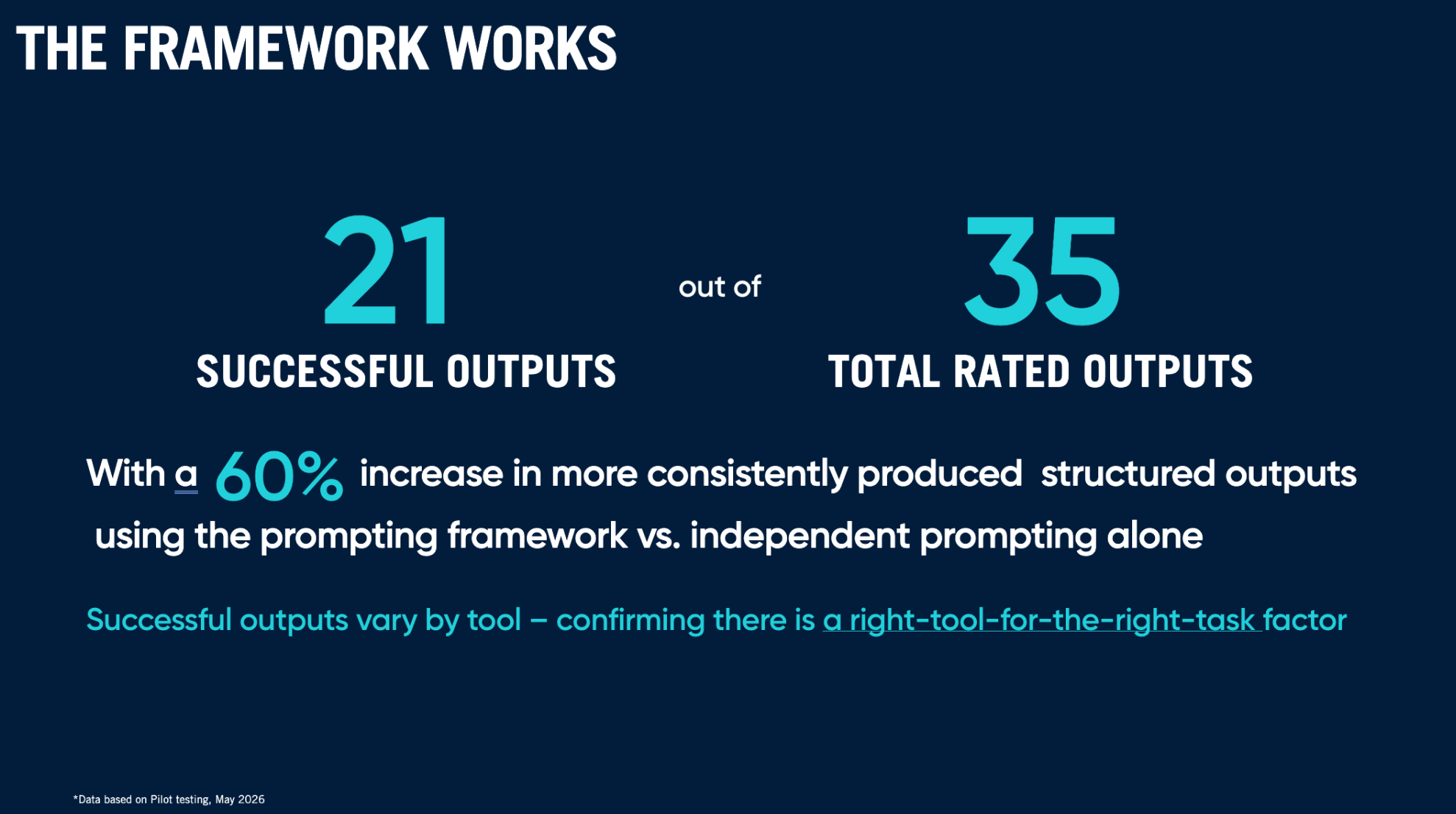
To validate the framework, I ran a hands-on pilot with designers across the AI design tool stack. The purpose was to test the framework in practical scenarios, not just present it as theory. Designers applied AI to different parts of their workflow, including research synthesis, ideation, prioritization, documentation, prototyping support, and readout preparation. From there, the work evolved into a tool-to-workflow map that matched each AI tool or capability to the specific moments in the design process where it provided the most value.
The pilot revealed that designers did not just need access to AI tools. They needed guidance on how to integrate AI into the way they already worked. The biggest insight was that AI adoption becomes more useful when it is mapped to specific workflow moments. Instead of asking, "Which tool should I use?" designers needed to ask, "What am I trying to do in the design process, and what kind of support do I need?"
For example, when synthesizing research, AI could help identify patterns, summarize raw notes, or generate first-pass themes, but designers still needed to validate meaning and avoid over-relying on surface-level summaries. When ideating, AI could help expand solution directions, generate alternative flows, or pressure-test assumptions, but designers still needed to evaluate feasibility, user fit, and business alignment. When preparing readouts, AI could help structure narratives and translate findings into stakeholder-friendly language, but designers still needed to protect nuance and make the final strategic call.
Deliverables
Structured AI Prompting Framework documentation
- Human-in-the-loop AI usage framework for UX research
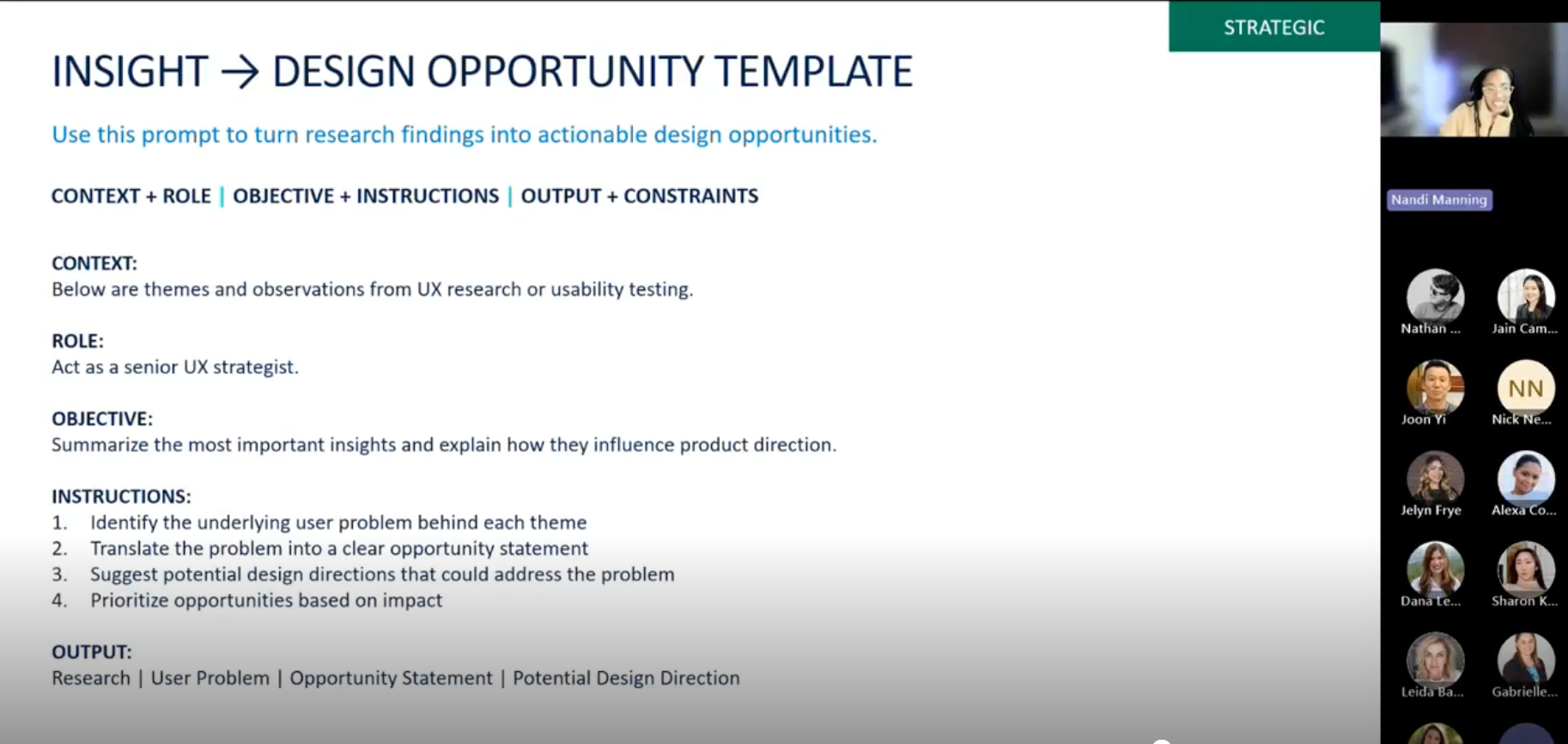
- Reusable prompt templates across planning, synthesis, and communication
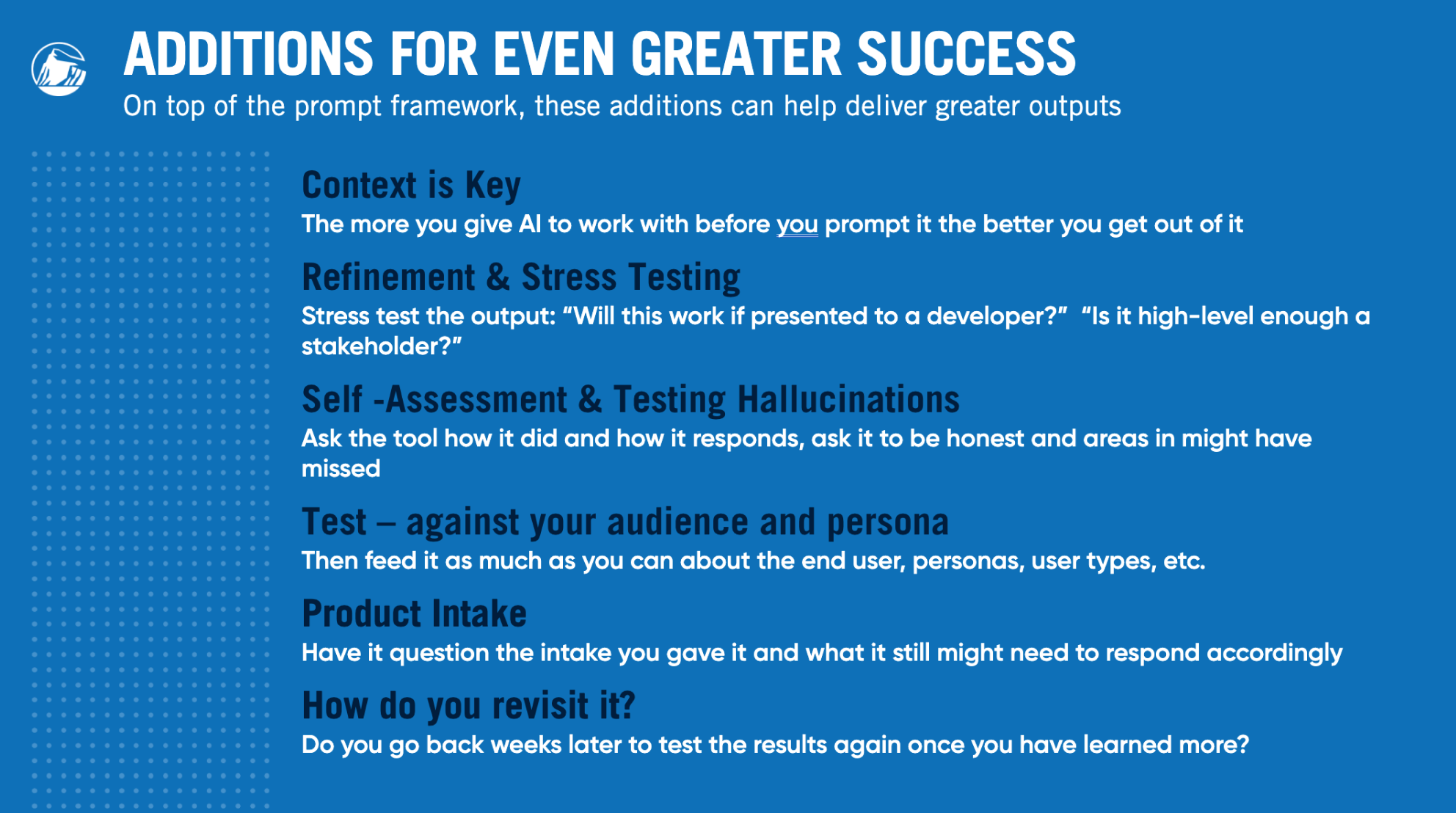
- Guidance on responsible adoption and validation practices
- Team alignment artifacts and workflow recommendations
Outcome
The work resulted in more than a prompt template. It became a repeatable AI-enabled DesignOps system that helped standardize how designers used AI across research, synthesis, communication, and documentation. It also created shared language designers could use when explaining AI-assisted work to product, research, business, and technology partners.
The broader outcome was a shift from ad-hoc AI experimentation to governed, intentional practice. Designers had a clearer way to define the task, choose the right tool, structure better prompts, evaluate the output, and decide where human judgment needed to intervene. This work supported a design organization behind an enterprise portal serving 1.6M+ users and became a strong example of how AI can be operationalized inside real enterprise design workflows.
Role
Senior UX Designer — Prudential
Timeline
2025
Scope
Discovery, Framework, Prompt Templates, Governance Guidance
Next Project